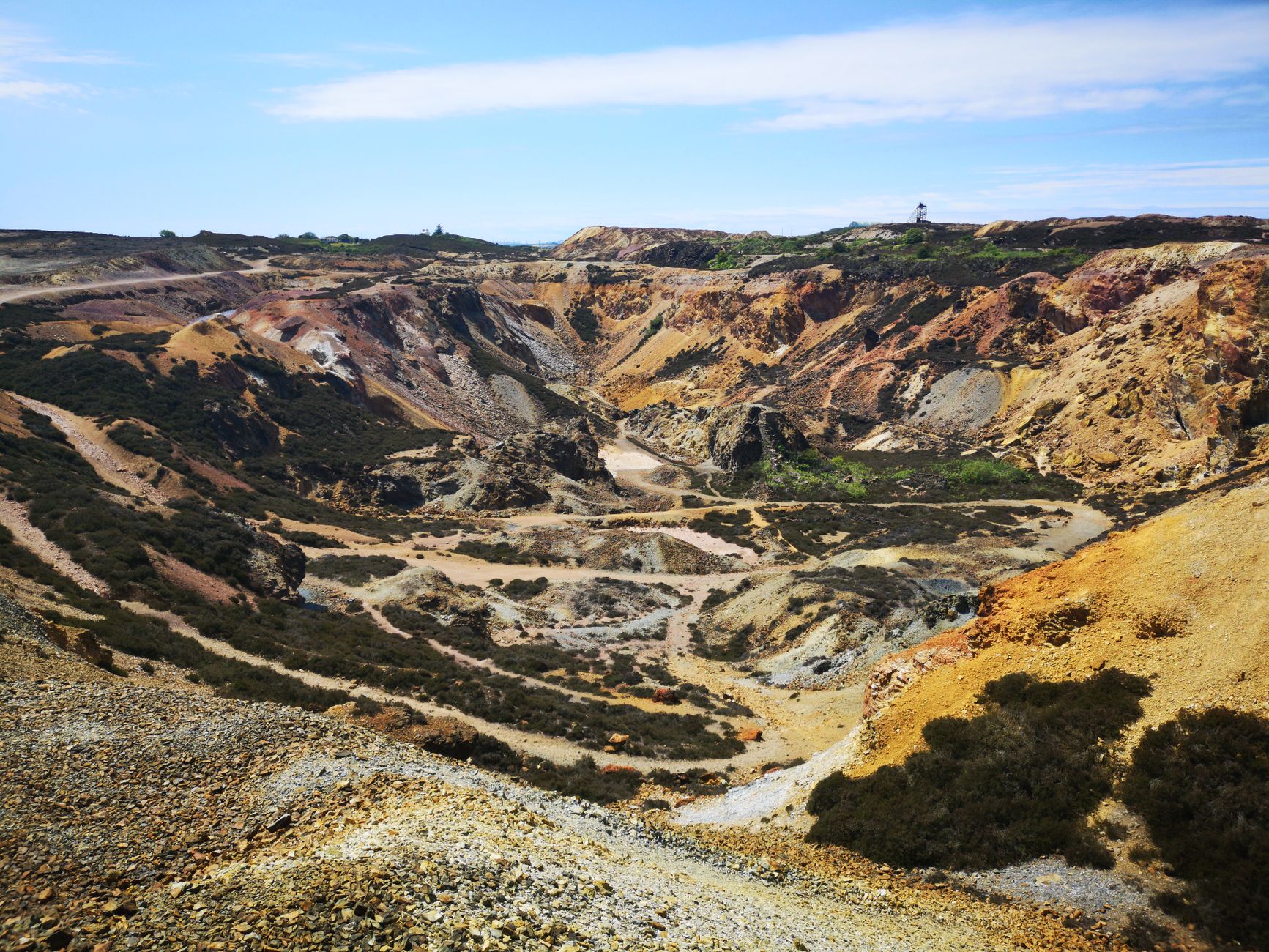
SSR Mining Inc. saw a notable surge this week, gaining momentum after announcing a $1.5 billion sale of its Çöpler mine, shifting focus to its U.S. operations.
Over the past week, SSR Mining Inc. (SSRM.TO) has gained traction in the market, buoyed by strategic moves to streamline its operations and enhance its focus on the Americas. The company's decision to sell its majority stake in the suspended Çöpler mine has not only alleviated cost pressures but has also positioned SSRM as a key player in the U.S. gold production landscape.
Investor takeaway: While SSR Mining's short-term outlook may face challenges, the long-term thesis is strengthened by its strategic pivot towards more stable U.S. assets.
Advertisement
SSR Mining Inc
SSRM.TO
SSRM.TO
SSR Mining Inc
 WealthAwesome
Market cap
$10.53B
P/E
13.6x
Div. yield
0.06%
Div. / share
$0.03
52W high
$54.50
52W low
$25.81
1W change
+6.03%
Beta
0.98
Analyst Price Targets
Based on analyst covering SSRM · as of Sep 21, 2026
Wall Street analysts forecast SSRM stock price to rise 13.6% over the next 12 months.
Consensus
Moderately BullishBased on avg. target vs last close (formal rating unavailable for Canadian listings)
Avg. Target
C$58.32
+13.6% Upside
Previously C$58.33 on Sep 17, 2026
Current Price
C$51.34
Last close
Targets are snapshotted when they change. Unchanged figures keep their original date. Not financial advice.
Wealth Awesome Price Forecast
WA ModelStatistical 90-day price range based on SSRM's historical volatility
30-Day Vol
50.5%
Annualized
90-Day Vol
63.2%
Annualized
Trend (90d)
+50.0%
Annualized drift
90d Mean
C$61.38
Expected price
| Horizon | Expected | 68% Range (1σ) |
|---|---|---|
| 30 trading days | C$54.49 | C$45.78 – C$64.86 |
| 60 trading days | C$57.83 | C$45.20 – C$73.99 |
| 90 trading days | C$61.38 | C$45.39 – C$83.00 |
Methodology: Range is calculated using 30-day realized volatility via geometric Brownian motion (log-normal model). 68% band = ±1σ, 95% band = ±2σ. This is a statistical model, not a prediction. Past volatility does not guarantee future results. Not financial advice.
Advertisement
SSR Mining's Valuation: A Bargain or a Risk?
Currently, SSR Mining trades at a forward P/E of 4.81x, significantly lower than the industry average of 12.86x. This valuation reflects the market's cautious stance on SSRM's near-term cash flow pressures, primarily stemming from costs associated with the suspended Çöpler mine. However, as production ramps up at its U.S. operations, there is room for upward revision in earnings estimates, potentially leading to a re-rating of the stock.
Bull case
The positive outlook for SSRM includes:
- Focused Operations: The sale of Çöpler allows SSRM to concentrate on its profitable U.S. mines, which are expected to drive growth in the second half of 2026.
- Strong Cash Flow Potential: With expected normalization of unit costs and increased production, SSRM could see significant free cash flow generation later in 2026.
- Valuation Discount: SSRM trades at a forward P/E of 4.81x, which is below industry averages, suggesting potential for price appreciation as operational efficiencies improve.
Bear case
Risks for SSRM include:
- Near-Term Cash Squeeze: The company faces elevated costs in the first half of 2026, which could pressure margins and free cash flow.
- Execution Risks: Operational challenges at Marigold and Seabee could impact production timelines and cost management.
- Çöpler Overhang: The ongoing suspension of the Çöpler mine continues to pose a financial burden, with care-and-maintenance costs expected to reach $35–$40 million quarterly.
Why SSR Mining's Shift to U.S. Operations Matters
Advertisement
The recent sale of the Çöpler mine marks a pivotal moment for SSR Mining. This strategic move allows the company to shed ongoing costs associated with the suspended asset and refocus on its U.S. operations, which are more stable and profitable. By positioning itself as the third-largest gold producer in the U.S., SSRM aims to enhance its operational visibility and cash flow potential. Investors are likely to view this shift favorably, as it reduces jurisdictional risks and aligns with a clearer production timeline, particularly as the company anticipates stronger output in the latter half of 2026.
Navigating Near-Term Challenges
Despite the positive long-term outlook, SSR Mining faces immediate hurdles. The first half of 2026 is expected to be challenging, with high all-in sustaining costs and a significant cash outlay for maintenance of the Çöpler mine. This could lead to tighter margins and subdued free cash flow during this period. Investors should keep an eye on the company's ability to manage these costs while ramping up production at its U.S. sites, as operational execution will be crucial for maintaining investor confidence.
Capital Allocation and Growth Prospects
SSR Mining's capital allocation strategy will play a critical role in its future growth. The company has authorized up to $300 million for share repurchases, which could bolster shareholder value but also compete with funding needs for operational improvements. As SSRM invests in its U.S. assets, including Marigold and Cripple Creek & Victor, the focus will be on balancing immediate capital returns with long-term growth initiatives. This strategy could enhance the company's financial resilience and position it for sustained growth as production levels normalize.
Best next step
Keep exploring this topic
If you want to go deeper, these are the most useful follow-up pages and tools for this topic.
Broker comparison
Best trading platforms in Canada
Compare $0-commission brokers before you act on a ticker story.
Safe cash
Best GIC rates in Canada
If the story makes you want to de-risk, compare guaranteed rates next.
HISA roundup
Best high-interest savings accounts
Keep dry powder in a no-fee savings account instead of chequing.
TFSA room
Check TFSA contribution room
Shelter the next contribution before you buy.
Advertisement

Wealth Awesome
Timely coverage of Canadian stocks, earnings, dividends, and market movers for DIY investors. Stories are checked against exchange data and public filings.
View Full Profile →✅ Reviewed by Certified Financial Professionals
This content has been reviewed by CFA® charterholders and Certified Financial Planners (CFP®) with over a decade of experience in Canadian financial markets. All information is fact-checked against official Canadian sources and regulations.
Why these credentials matter: CFA® charterholders complete 900+ hours of rigorous study in investment analysis and ethics. CFP® professionals are held to the highest standards of financial planning competency and fiduciary duty in Canada.
⚠️ Professional Disclaimer
This content is for educational purposes only and should not be considered personalized financial advice. While our team brings professional expertise, individual circumstances vary. For personalized guidance, consult with a qualified financial advisor, tax professional, or mortgage specialist.