CIBC Investor's Edge
Get 200 free trades when you open an eligible CIBC Investor's Edge account with promo code EDGE2026.
- ✓200 free stock & ETF trades
- ✓Unlimited commission-free trades on 180+ select ETFs
- ✓Offer ends September 30, 2026
Want to know how taxes differ across Canadian provinces in 2025? Here’s the short answer: Provincial tax comparison calculators help you estimate taxes by region, offering insights into income tax, sales tax, and deductions. For example, earning $50,000 in Alberta costs $8,832 in taxes, while in Manitoba, it’s $11,114 - a $2,282 difference. These tools are essential for planning your finances, whether you're considering a job move or retirement.
Key Points:
- What they do: Compare federal/provincial taxes, deductions, and credits across provinces.
- Why they matter: Tax rates vary widely - Quebec’s top income tax rate is 25.75%, while Alberta’s is 15%.
- Features to look for: Updated tax rates, side-by-side comparisons, and credit integration.
- Top tools: EY Canada, TurboTax, Wealthsimple, and Wealth Awesome.
Quick Tip: Use these calculators to see your after-tax income, average tax rate, and marginal tax rate. They’re perfect for evaluating how location impacts your finances.
For more details, including a breakdown of 2025 tax rates and the best calculators available, keep reading.
$100K Salary in Canada, which Province Takes the Most Tax? Calculate your Take Home Salary with Me!
Key Features of Provincial Tax Comparison Calculators
Provincial tax calculators are handy tools for comparing tax obligations across Canada. By understanding their features, you can choose the right tool to support accurate financial planning and make well-informed financial decisions.
Basic Calculator Functions
At their core, provincial tax calculators are designed to provide straightforward tax estimates. Typically, you’ll need to input your taxable income, select your province or territory of residence, and include a few personal details like marital status, age, or number of dependents.
Once your information is entered, these calculators generate a detailed tax breakdown. This includes federal and provincial/territorial taxes, payroll deductions like the Canada Pension Plan (CPP) and Employment Insurance (EI), and key metrics such as:
- Total tax payable
- After-tax income
- Average tax rate (total tax divided by your income)
- Marginal tax rate (tax rate applied to your last dollar of income)
For example, CareerBeacon’s calculator provides a clear picture by showing total deductions, net pay, and average tax rate for each province. These basic functions form the foundation for more advanced tools offered by other calculators.
Advanced Calculator Features
Advanced calculators go beyond the basics, offering tools that provide deeper insights into your tax situation. One standout feature is the side-by-side comparison tool, which allows you to compare tax results from multiple provinces at once. EY Canada’s calculator excels in this area.
Many advanced tools also incorporate tax credits and deductions. For instance, EY’s calculator lets you include RRSP contributions to see potential tax savings. Similarly, TurboTax and Wealthsimple calculators account for various credits, reflecting your actual tax burden after deductions.
Some calculators are equipped to handle more complex scenarios, such as income from multiple sources or self-employment. They often include visual aids like charts and tables, making it easier to spot tax differences across provinces at a glance.
These advanced features are most effective when paired with reliable data sources.
Trusted Calculator Sources
When it comes to tax calculations, accuracy and dependability are non-negotiable. Several platforms stand out for their reliable, Canada-specific tools.
Wealth Awesome is a popular resource for Canadians, offering calculators and insights tailored to the country’s tax system. Their tools are designed to help users make informed financial decisions.
EY Canada provides professional-grade calculators updated to reflect the latest tax rates, including figures as of June 1, 2025. Their tools are detailed and comparable to those used by tax professionals.
TurboTax Canada focuses on user-friendly calculators that are updated annually to align with Canada Revenue Agency guidelines. Their tools integrate tax credits and deductions seamlessly, making them a solid choice for general tax planning.
Top Canadian Tax Calculators
| Calculator Source | Key Strengths | Update Frequency | Best For |
|---|---|---|---|
| Wealth Awesome | Canada-specific tools, data-driven insights | Regular | Comprehensive financial planning |
| EY Canada | Professional-grade accuracy, side-by-side comparisons | Annual | Detailed tax analysis |
| TurboTax Canada | Easy-to-use interface, credit integration | Annual | General tax planning |
| Wealthsimple | Simplified interface, quick results | Annual | Basic comparisons |
These platforms ensure their calculators remain reliable by updating tax rates and brackets based on government releases and indexation factors. This commitment to accuracy makes them trustworthy options for navigating provincial tax differences effectively.
How to Use a Provincial Tax Comparison Calculator
Now that you know the features of a provincial tax comparison calculator, let’s dive into how to use it effectively. By following a clear process, you can get accurate results to help you make informed decisions about where to live or work in Canada.
Gathering Your Information
Before you start, make sure you have all the necessary financial details at hand. Begin with your taxable income - this is your gross income minus any deductions and forms the base for your tax calculations. It’s not the same as your total income, so be precise.
You’ll also need to gather details about deductions, such as RRSP contributions, childcare expenses, or union dues, and tax credits like the basic personal amount, spousal credits, or disability credits. Having these numbers ready ensures your results reflect your actual financial situation, rather than just a rough estimate.
Some calculators may also ask for additional income details, like pension income or investment earnings. Be prepared to input separate amounts for employment income, self-employment earnings, and other sources.
Finally, decide which provinces or territories you want to compare. Whether you’re weighing a move from Ontario to Alberta or exploring options across Canada, having a clear list will make the process smoother.
Entering Data and Getting Results
Once you’ve gathered your information, it’s time to input it into the calculator. Most tools follow a similar process, though the layout may vary. Start by selecting the tax year - ensure you’re using the most up-to-date data (e.g., 2025) since tax brackets and rates can change annually.
Enter your gross income and deductions. For example, if you earn $75,000 and contribute $5,000 to your RRSP, input both amounts in the appropriate fields. Double-check the automatically calculated taxable income to ensure accuracy.
Some advanced calculators, such as EY Canada's tool, let you compare multiple provinces at once. Simpler calculators might require you to repeat the process for each province. Be sure to include any additional personal details the tool asks for, such as your age or marital status.
Once everything is entered, hit the calculate or compare button. Most tools will provide instant results, breaking down federal taxes, provincial taxes, and payroll deductions like CPP and EI contributions.
Reading Your Results
Interpreting the results is key to making informed decisions. Focus on the after-tax income - this is the amount you’ll actually take home after all taxes and deductions. It’s the clearest indicator of how your location impacts your finances.
Pay attention to both the average tax rate and the marginal tax rate. The average tax rate shows the percentage of your total income paid in taxes, while the marginal rate tells you how much tax you’ll pay on your next dollar of earnings.
Here’s an example of what your results might look like:
| Province | Total Tax | Net Pay | Average Tax Rate |
|---|---|---|---|
| Alberta | $9,201.80 | $40,798.20 | 11.23% |
| Ontario | $10,052.12 | $39,947.88 | 12.93% |
| Manitoba | $11,114.69 | $38,885.31 | 15.06% |
Additionally, consider the cost of living in each province. Some calculators, like those on Wealth Awesome, include this information alongside tax data, giving you a more complete picture of how far your income will stretch in different locations.
Review the federal and provincial tax breakdowns carefully. Since provincial rates vary, this breakdown shows exactly how much moving to a different province would save or cost you each year.
Finally, use the calculator to model different scenarios. Thinking about a new job in another province? Input the potential salary to see how your finances would change. Planning for retirement? Test how pension income is taxed in different provinces to find the best fit for your future.
Armed with these insights, you’ll be ready to choose the right provincial tax calculator for your needs in the next section.
sbb-itb-24a3f88
Provincial Tax Rate Differences Across Canada
Navigating Canada's provincial tax system can be a game-changer for your finances. Provincial tax rates play a big role in determining your take-home income and shaping your long-term financial plans. Here's a closer look at how income and sales tax rates differ across the country.
2025 Provincial Income Tax Brackets and Rates
Income tax rates vary widely across provinces, creating distinct financial landscapes. For instance, Quebec tops the charts with a maximum marginal rate of 25.75% for income over $129,590, while Nunavut offers the lowest rate at 12.2% for income exceeding $168,967. Ontario's tax structure starts at 5.05% for income up to $52,886 and climbs to 13.16% for income above $220,000. Alberta, on the other hand, applies a flat 10% rate up to $151,234, with a top rate of 15% for income over $362,961 - making it appealing for middle-income earners.
To put this into perspective, someone earning $75,000 annually would see notable differences in provincial taxes. In Ontario, the provincial tax would be around $4,800, while in Quebec, it could reach approximately $8,000. Alberta residents at the same income level would pay roughly $7,500 in provincial tax.
Other provinces paint a diverse picture. British Columbia and Nova Scotia stand out for their higher top rates, at 20.5% and 21% respectively. The Atlantic provinces generally lean toward higher rates, with New Brunswick at 19.5% and Prince Edward Island at 19%. Saskatchewan (14.5%) and Manitoba (17.4%) offer more moderate rates. Among the territories, Nunavut boasts the lowest rate, while the Northwest Territories caps at 14.05% and Yukon at 15%.
Provincial Sales Tax Comparison
Sales taxes further differentiate the provinces. Alberta is unique in having no provincial sales tax, relying solely on the 5% federal GST. Conversely, provinces using the Harmonized Sales Tax (HST) - including Ontario (13%), Nova Scotia (14%), and New Brunswick, Newfoundland and Labrador, and Prince Edward Island (all at 15%) - combine federal and provincial sales taxes into a single rate. While this simplifies administration, it can increase the overall tax burden.
Quebec takes a different approach, pairing the 5% GST with a 9.975% Quebec Sales Tax (QST), resulting in a combined rate of nearly 15%. Meanwhile, British Columbia, Manitoba, and Saskatchewan maintain separate provincial sales taxes at 7%, 7%, and 6%, respectively, on top of the 5% GST. The territories mirror Alberta’s model, charging only the 5% GST without additional sales tax.
For a family spending $50,000 annually on taxable goods and services, the difference between Alberta's 5% tax rate and Prince Edward Island's 15% rate could mean an extra $5,000 in sales tax. When combined with income tax, these sales tax differences significantly impact each province's overall tax burden.
High and Low Tax Provinces
Quebec stands out for its high combined income and sales tax rates, making it one of the most expensive provinces tax-wise. On the flip side, Alberta offers a tax-friendly environment, particularly for middle- and upper-middle-income earners, thanks to its lack of provincial sales tax and relatively low income tax rates.
Provinces like Nova Scotia and British Columbia fall into the higher-tax category, with elevated top marginal rates and sales taxes contributing to a heavier financial load. The territories, with their straightforward tax structures and lower rates, present a more affordable alternative.
For high-income earners, choosing the right province can make a significant difference in annual tax liabilities, heavily influencing take-home pay. These variations highlight the importance of using a reliable tax calculator to plan effectively.
Choosing the Best Provincial Tax Comparison Calculator
When it comes to comparing taxes across provinces in Canada, having access to the right calculator can make all the difference. The best tools are those that are updated with the latest tax rates and tailored specifically to Canadian tax structures. Below, we highlight some of the top platforms, key features to look for, and why Wealth Awesome is a standout choice for Canadians.
Top Canadian Tax Calculators
Several platforms offer reliable provincial tax calculators, each bringing something unique to the table:
- EY Canada’s Tax Calculator: This tool provides detailed federal and provincial tax calculations, including RRSP savings. It reflects tax rates as of June 1, 2025, and covers all provinces and territories[2][6].
- TurboTax Canada: Known for its detailed breakdowns, this calculator includes federal and provincial tax brackets, CPP, and EI premiums. It also offers refund estimates for the 2025-26 tax year[4].
- Wealthsimple’s Tax Calculator: Designed with simplicity in mind, this platform explains marginal and average tax rates in an easy-to-understand format. It also accounts for payroll deductions[3].
- PwC Canada’s Calculator: Ideal for professional-grade analysis, this tool focuses on marginal tax rates and uses data current to October 9, 2025[8].
- CareerBeacon: This platform specializes in after-tax salary calculations, providing detailed deduction rates. Depending on your province, deductions range from 17.67% to 18.88%[7].
What to Look for in a Calculator
To make accurate tax comparisons, it’s important to choose a calculator that reflects both federal and provincial taxes. Here are some essential features to consider:
- Up-to-date Information: Ensure the calculator uses the latest tax rates and cites official sources. Tax brackets and rates change yearly, and outdated data can lead to costly mistakes.
- Comprehensive Coverage: A good calculator should include federal and provincial taxes, along with CPP and EI premiums. For instance, in Alberta, a $50,000 annual income results in $9,201.80 in total tax (11.23% average tax rate), while in the Northwest Territories, the same income incurs $9,441.63 in taxes (11.71% average tax rate)[7].
- Marginal and Average Tax Rates: Calculators that display both rates side by side allow for better decision-making. Marginal rates help assess the impact of earning additional income, while average rates provide a clearer picture of your overall tax burden.
- Provincial Comparisons: Tools that offer side-by-side comparisons of provincial taxes make it easier to evaluate differences and plan accordingly.
Why Wealth Awesome Stands Out
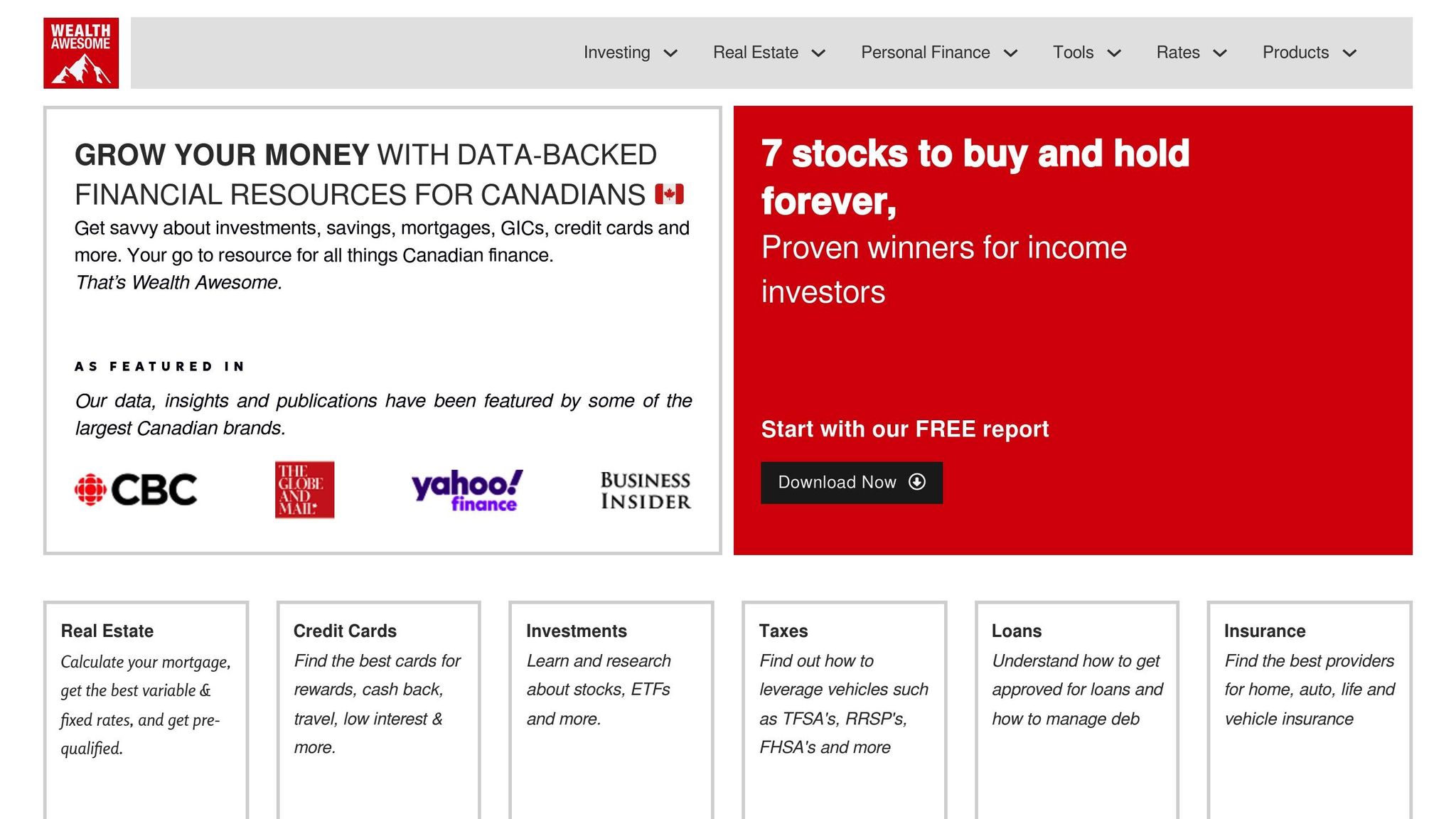
Wealth Awesome is uniquely tailored for Canadians, offering tools that focus exclusively on the country’s tax system. Here’s why it’s a top choice:
- Canadian-Centric Design: Unlike calculators designed for multiple countries, Wealth Awesome is built specifically for Canadian users, ensuring the data and features are relevant.
- Integrated Financial Insights: The platform goes beyond tax calculations, connecting tax planning with broader financial strategies. This approach helps users see how provincial tax differences align with their investment and savings goals.
- User-Friendly Experience: Wealth Awesome simplifies complex tax data, presenting it in a way that’s easy to understand. Clear explanations accompany the numbers, making it accessible for users at all levels of financial literacy.
- Up-to-Date Information: The platform is committed to using the latest tax rates and regulations, ensuring accuracy and reliability.
If you’re looking to optimize your provincial tax planning while gaining a broader understanding of your financial situation, Wealth Awesome is a tool worth exploring. Its combination of accuracy, usability, and financial insights makes it a valuable resource for Canadians.
Conclusion
Key Points Summary
Provincial tax calculators are essential tools for understanding and comparing tax obligations across Canada. Tax rates can vary significantly between provinces, especially for higher income brackets. For example, Quebec's top provincial tax rate sits at 25.75%, while Alberta's is much lower at 15% - a notable difference that underscores the importance of these calculators[7][1].
Tools like those from EY Canada, TurboTax Canada, Wealthsimple, and PwC Canada provide updated 2025 tax rates for both federal and provincial taxes. They go beyond the basics by showing marginal and average tax rates, factoring in CPP and EI contributions, and offering side-by-side provincial comparisons. These features make them reliable resources for making informed financial decisions.
Wealth Awesome particularly shines with its Canada-focused tax tools. Its design prioritizes accuracy and simplicity, making it easier to understand complex tax information while integrating broader financial planning strategies.
Making Better Financial Decisions
The insights these calculators provide can help you fine-tune your financial strategy. Whether you're weighing a job offer in a different province, planning for retirement, or considering a move, these tools deliver the hard numbers you need to make well-informed choices.
Using these tools strategically can also help with tax-saving measures. For instance, making contributions to an RRSP can optimize your savings based on your marginal tax rate[1][5]. By running scenarios, you can plan the timing of deductions to maximize your benefits.
While these calculators are excellent for estimating tax obligations, they should be part of a broader financial planning process. Pair their outputs with other considerations like cost of living, housing prices, and job market opportunities when making major decisions. They’re especially useful for shaping your deduction strategies, but consulting a financial professional can add another layer of insight.
Taking the time to understand your provincial tax obligations can lead to smarter financial planning, better savings strategies, and more confidence in decisions about where to live and work in Canada.
FAQs
What should I consider when choosing a provincial tax comparison calculator for my financial needs?
To find the right provincial tax comparison calculator, focus on tools that are accurate, easy to use, and specifically designed for the Canadian tax system. The best calculators will let you input details like your income, deductions, and credits while comparing tax rates across provinces. Make sure the tool is updated for the latest tax year, such as 2025, to ensure it reflects current tax rules and rates.
Some calculators go a step further by offering extra features. These might include visual comparisons or detailed breakdowns of federal and provincial taxes, making it easier to grasp your overall tax situation. For reliable options, check out platforms like Wealth Awesome. They specialize in Canadian personal finance and provide tools aimed at simplifying tax and financial planning.
How do provincial tax rates differ between high-tax and low-tax provinces in Canada for 2025?
In 2025, provincial tax rates in Canada will vary widely depending on where you live. For instance, Quebec is known for its higher income tax rates and additional provincial taxes, whereas Alberta stands out with a lower overall tax burden. These differences can significantly influence your take-home pay, cost of living, and financial planning.
To get a clearer picture of how these variations affect you, using a provincial tax comparison calculator can be incredibly helpful. These tools allow you to quickly compare income brackets, deductions, and credits across provinces, giving you a better understanding of your financial situation.
How can side-by-side provincial tax comparisons in calculators improve financial planning?
Side-by-side comparisons of provincial tax rates make it simple to see how taxes vary across Canada, giving you the information you need to make smarter financial choices. Whether you're thinking about moving to a different province or planning your next investment, these tools can highlight where you might save - or spend - more on taxes.
By breaking down the numbers in a clear and straightforward way, these calculators take the guesswork out of financial planning. They help you see exactly how taxes will affect your income and expenses. Platforms like Wealth Awesome often offer these resources, making them a go-to for Canadians aiming to fine-tune their financial plans.
Related Blog Posts
Best next step
Keep exploring this topic
If you want to go deeper, these are the most useful follow-up pages and tools for this topic.
Tax tool
Run the income tax calculator
Estimate take-home pay and tax impact before choosing software or planning contributions.
Registered account
Check your TFSA contribution room
Use excess cash more efficiently after filing by checking your tax-free savings capacity.
Cash management
Compare today’s savings rates
Find a better home for refunds, emergency savings, or short-term cash after tax season.
Advertisement
7 stocks to buy and hold forever
Proven winners for income investors — blue-chip dividend stocks to hold for decades.
Get the FREE Report
Qayyum Rajan, CFA
Qayyum is the CEO of Wealth Awesome, a leading Canadian personal finance publication. As a CFA charterholder with extensive experience in fintech, data science, and quantitative finance, he brings a unique analytical perspective to investing and wealth management.
View Full Profile →✅ Reviewed by Certified Financial Professionals
This content has been reviewed by CFA® charterholders and Certified Financial Planners (CFP®) with over a decade of experience in Canadian financial markets. All information is fact-checked against official Canadian sources and regulations.
Why these credentials matter: CFA® charterholders complete 900+ hours of rigorous study in investment analysis and ethics. CFP® professionals are held to the highest standards of financial planning competency and fiduciary duty in Canada.
⚠️ Professional Disclaimer
This content is for educational purposes only and should not be considered personalized financial advice. While our team brings professional expertise, individual circumstances vary. For personalized guidance, consult with a qualified financial advisor, tax professional, or mortgage specialist.