CIBC Investor's Edge
Get 200 free trades when you open an eligible CIBC Investor's Edge account with promo code EDGE2026.
- ✓200 free stock & ETF trades
- ✓Unlimited commission-free trades on 180+ select ETFs
- ✓Offer ends September 30, 2026
Filing your taxes in Canada can be straightforward when you follow a clear plan. Here’s what you need to know:
- Key Deadlines: File your 2024 tax return by April 30, 2025 (self-employed individuals have until June 16, 2025, but still need to pay any taxes owed by April 30). Online filing opens on February 24, 2025.
- Who Must File: Anyone owing taxes, earning self-employment income over $3,500, selling property, or participating in plans like the Home Buyers’ Plan must file. Even if you don’t owe taxes, filing ensures access to benefits like the Canada Child Benefit and GST/HST credit.
- Penalties for Late Filing: Late filers face a 5% penalty on taxes owed, plus 1% for each full month late (up to 12 months). Repeat offenders may pay even higher penalties.
- How to File: Choose between CRA-approved tax software (e.g., TurboTax, Wealthsimple Tax), CRA My Account, paper filing, or hiring a tax professional. Filing online is fastest, with refunds processed in about two weeks.
- Documents to Prepare: Collect income slips (e.g., T4, T5), receipts for deductions (e.g., RRSP contributions, medical expenses), and personal details like your SIN and last year’s Notice of Assessment.
- Maximize Deductions and Credits: Common claims include medical expenses, student loan interest, charitable donations, and home-related credits. Keep organized records to support your claims.
Filing on time avoids penalties, ensures benefits, and speeds up refunds. Whether you file yourself or seek professional help, staying organized and informed is key to a smooth tax season.
HOW TO FILE TAX RETURN ONLINE (CANADA) - STEP BY STEP GUIDE
Tax Times for 2025
Once you know who has to file taxes and why being on time is key, the next thing is to learn the main tax times for 2025. Keeping up with these times helps you stay right with the Canada Revenue Agency (CRA) and dodge fines. Tax times change based on your work type, and missing them can cost a lot.
Dates to File and Pay
The top date to keep in mind is 30 April 2025. By this day, you must file your 2024 tax and benefit return and pay any taxes due. This is for workers, those who have stopped working, and people who work for others [1].
If you work for yourself - or your mate or common-law partner does - you get until 16 June 2025 to file your return. But, you still need to pay any taxes by 30 April 2025 to stay clear of extra charges [1].
Want to be early? You can start to file your 2024 tax online as soon as 24 February 2025. Filing soon can help you get your refund faster if the CRA needs to give you money.
| Group | Time to File | Time to Pay |
|---|---|---|
| Most People | 30 April 2025 | 30 April 2025 |
| People Who Work for Self | 16 June 2025 | 30 April 2025 |
| Big Work Groups | Six months post year-end | Normally, two months post year-end (three months for some small companies) |
Last year, the CRA worked on over 33 million tax and benefit forms. About 93% were sent online [1]. They gave back money to more than 19 million people, each getting back $2,294 on average [1]. These big numbers show why it's key to meet deadlines to dodge issues.
What Happens When You Miss Deadlines
Filing on time isn't just to skip fines - it helps you keep getting benefits and stops money worries. If you miss a deadline, it can cost you a lot, as the CRA is strict with fines for being late.
Late-filing fines start at 5% of what you owe, plus an extra 1% for each full month you're late, up to 12 months [3]. Say you owe $1,000 and file three months late, you might pay about $80 in fines.
If you often file late, the fines grow. For those fined for filing late in the last three years, and who got a notice to file, the fine goes up to 10% of what you owe, plus 2% for each full month late, up to 20 months [3].
"The penalties (for missing a deadline) are horrendous - a five per cent penalty off the top for missing the deadline, and upward from there."
– Ryan Minor, director of tax at Chartered Professional Accountants of Canada [5]
In addition to fines, the cost from not paying on time piles up each day. It starts the day after your pay is to be sent in [4]. The CRA changes the fee rates every three months, so these costs can rise fast [3].
Even if you can’t pay all your taxes, sending your forms in when due is still smart. This stops fines for being late, and you can talk to the CRA about ways to pay or other help.
Not filing on time can also mess up your aid. Cash from things like the Canada Child Benefit and GST/HST credit might come late if you don't send your forms on time [3]. But, if big issues like bad illness or money troubles hit you, you can ask for taxpayer relief to drop fines and costs. You must give a full ask to the CRA and tell them your story [3].
How to Get Set for Your Tax Return
Making sure your tax papers are right is a big step in making the filing work easy and making sure you get what you should.
What You Need
To do your taxes well, start by getting the right papers ready. Put them in three groups: income, deductions, and personal info. Each group helps fill out your return.
First, get your personal stuff like your SIN, your spouse’s SIN, birth dates, and last year’s Notice of Assessment. This paper is key - it shows how much you can put into your RRSP and other details. If you file online, remember your NETFILE code.
Next, look at income slips. They tell the Canada Revenue Agency (CRA) what you made. For instance:
- T4 slips from work show your salary.
- T3 and T5 slips from banks or funds show interest and dividends.
- T4E slips show Employment Insurance money.
- Students might get a T2202 slip for school credits.
If self-employed, keep a clear record of your business money and costs all year.
Then, gather receipts for deductions and credits that can cut your taxable income. Like:
- RRSP slips really matter.
- Keep receipts for health costs, child care, and gifts to charity.
- Don’t miss things like union dues, student loan interest, and moving costs.
If you deal with rental income, volunteer credits, or home fixes, have the right papers ready for those too.
How to Set Up Your Tax Info
A good setup can ease tax time stress. Use three folders or envelopes tagged Income, Deductions, and Credits like the tax forms or software.
- Income Folder: Put all income slips like T4s, T5s, and records of what you made on your own. Bank papers showing interest or gains go here too.
- Deductions Folder: Keep receipts that lower your taxable income, such as RRSP contributions and business costs.
- Credits Folder: Save papers for costs that lower your tax directly like health bills, gifts to charity, and school slips.
To keep it simple, set up a tracking system all year. Use folders, cloud storage, or phone apps to store receipts right when you get them. And keep all these papers for at least six years after you file - in case the CRA needs to see them.
If you need help keeping track, services like Wealthsimple Tax, TurboTax, and H&R Block have free checklists. They suit different needs whether you're a student, self-employed, or have many ways of making money. A checklist can calm you and make sure you don't miss out on anything.
Once your papers are in order, you’ll be set to pick the best way to file.
How to Pick Your Tax Filing Method
When your files are set, you need to choose how to file your taxes. This choice relies on how tough your taxes are, your money, and if you're okay with using tech. If you want fast, go for electronic files since you can get your money back in two weeks (or 8–10 days with direct deposit). On the other hand, paper files can take up to 8 weeks to go through. Let's look at all the ways, from software to getting a pro.
CRA-OK'ed Tax Software
Using approved tax software is a liked and easy way to do your taxes. These tools walk you through each step and file online via NETFILE. Here are some you can pick:
- TurboTax: A top pick with over 30 years of helping with Canadian taxes. It has different levels to meet varied needs. In 2023, the average money back for TurboTax users was $3,644.
- H&R Block: Known for good prices, H&R Block has levels that often cost less for many.
- Wealthsimple Tax: Lets you pay what you feel, with a choice to pay more for help from a pro.
- UFile and StudioTax: UFile gives you many tools, while StudioTax is free but comes with fewer tools than ones you pay for.
The right software for you depends on your tax status. For example, about 37% of Canadians can use the free version of TurboTax, but if you have complex files - like from stocks, rental spots, or a business - you might need to pay for more features.
CRA My Account and Paper Filing
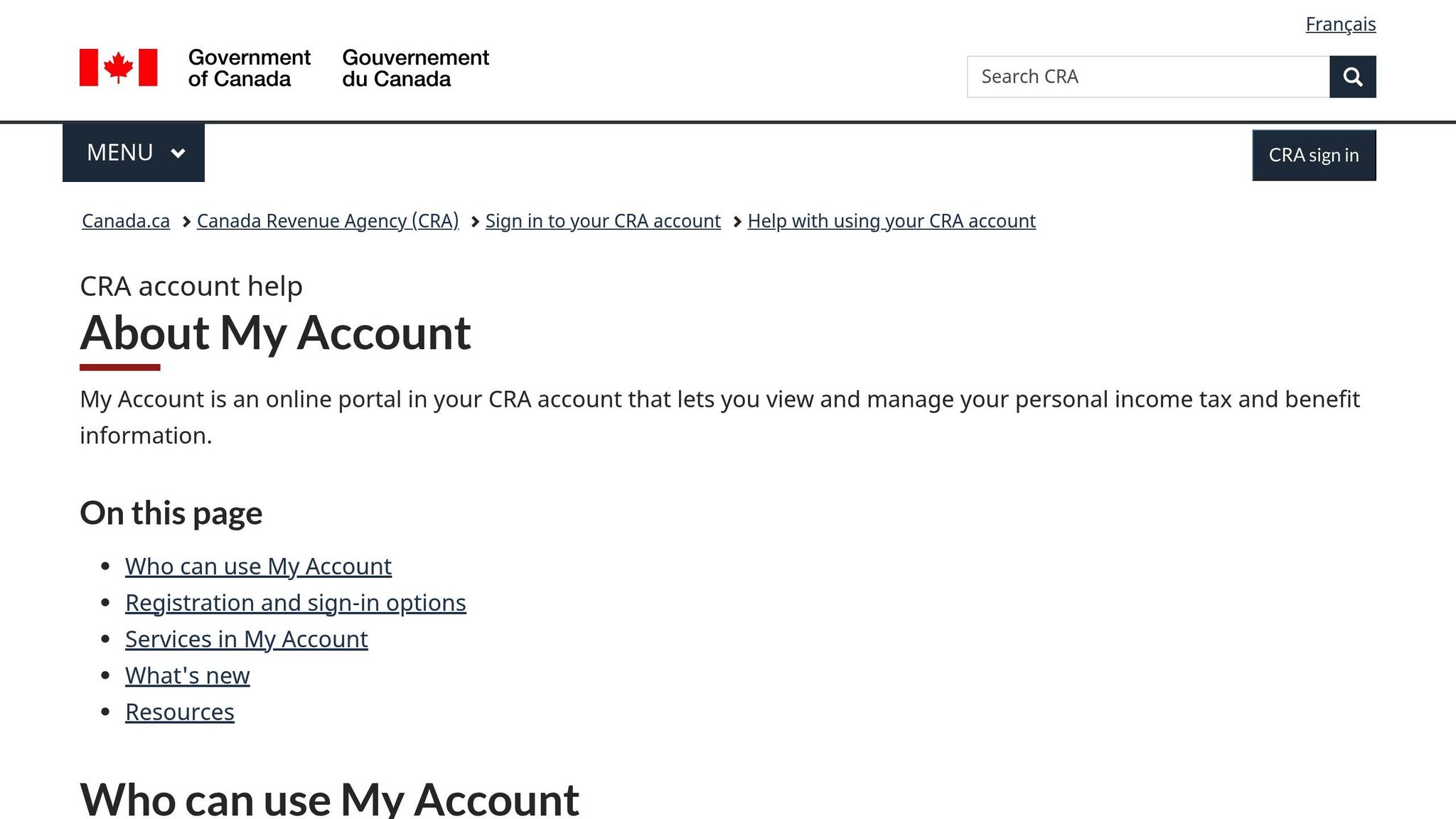
If you'd rather not use third-party software, you can file right with the CRA. Here are your choices:
- CRA My Account: This free online service is as quick as tax software but doesn’t guide as much.
- Paper Filing: If the old way suits you, just print, fill, and mail your forms. Though free and good for simple files or if you're not tech-savvy, the 8-week wait might be too long.
The CRA also has special setups for some folks. For instance, SimpleFile by phone is open for those with low or stable incomes, and the CRA offers help from agents for those with simple taxes and small incomes. These ways get your return done in about two weeks but are by invite only.
Using a Tax Pro
For more complex taxes, going to a tax pro is wise. In 2025, around 60% of personal tax returns in Canada were done through EFILE by approved tax pros, showing the trust many have in their skills.
A tax pro is extra useful if you work for yourself, own rental spots, have many ways you make money, or just moved to Canada. They can spot tax breaks you might miss, keep up with CRA news, and deal with the CRA if you get checked.
The price to file changes with how hard your form is:
- Simple forms: $100–$150
- Not too hard forms (like if you work for yourself or have money made from stocks): $200–$350
- Very hard forms (like many ways of making money or big cuts for business): $500 or more
Paying a pro can be worth it if they find ways for you to save more money than their fee. They also know a lot, which means less chance of making mistakes that could make the CRA check your form.
Ways to File: A Quick Look
Here are some fast facts on main ways to file:
| Way to File | Who It's Good For | What It Costs | How Long It Takes | Help If Checked |
|---|---|---|---|---|
| Use Tax Software | Most people | No cost to $60 | About 2 weeks | None |
| CRA My Account | People good with tech | No cost | About 2 weeks | None |
| By Hand | Only easy tax forms | No cost | About 8 weeks | None |
| Get an Expert | Hard tax cases | $100 to more than $500 | About 2 weeks | Yes |
Picking the best way to file can change how fast you get your money back and how sure you are about your tax return. Filing online is quick, while getting help from a pro gives you ease for tough cases. Choose the path that meets your needs, money plan, and how at ease you feel with the steps.
How to File Your Tax Return: 5 Steps
Once you've decided how you'll file - whether through tax software, CRA My Account, or with the help of a professional - it's time to get started. These five steps will guide you through the process to ensure everything is accurate and submitted on time.
Step 1: Gather Your Documents
Start by organizing all the documents you'll need. What you require depends on your financial situation [7], so having everything ready beforehand can save you time [6].
First, collect personal details like Social Insurance Numbers (SINs) and birth dates for yourself, your spouse, and your dependents. Don’t forget to confirm your current address. Next, pull together your income records, such as T4 slips from employers, T4E slips for Employment Insurance, T3 slips for trust income, and T5 slips for investment income. If you're self-employed, make sure to include all income sources, including tips or cash payments that might not appear on official slips.
For deductions and credits, gather receipts for things like RRSP contributions, medical expenses, and charitable donations. Finally, log in to your CRA My Account to check for any tax slips available online.
Step 2: Set Up or Access CRA My Account
Using CRA My Account can simplify your tax filing by giving you secure online access to your tax and benefit information [11]. You can register with a CRA user ID and password, through a Sign-In Partner (like your bank), or via a Provincial Partner if you're in BC or Alberta [9].
If you haven’t filed your taxes for the current or previous year, you’ll need to file first before registering for My Account [8][10]. Once registered, enable multi-factor authentication for extra security [8]. If you forget your login details, you can recover them online by providing your SIN, date of birth, a figure from your latest return, and answers to your security questions. Rest assured, the CRA does not share your registration details with third parties [10]. With your account set up, you're ready to input your information.
Step 3: Enter Your Information
Carefully input all your tax details. Start with your personal information - SIN, address, and family details - exactly as they appear on official documents. If you moved during the year, update your address with the CRA to avoid missing any correspondence [12].
Next, enter your income details from tax slips like T4s and T5s. For self-employment income, report all earnings, even those not on official slips. When adding deductions and credits, ensure you include everything, such as medical expenses, charitable donations, and RRSP contributions, along with supporting receipts.
If you're using tax software, take advantage of its error-checking tools to catch mistakes. Double-check everything before moving on to submission.
Step 4: Review and Submit Your Return
Take the time to review your return thoroughly. Confirm that all income matches your tax slips and that your deductions are backed by proper documentation.
If filing electronically, use CRA-approved NETFILE software to get immediate confirmation once your return is accepted. For paper submissions, choose a mailing method that provides proof of delivery. Accurate and complete entries help avoid delays, as the CRA may review your return to ensure compliance [12].
Step 5: Save Your Confirmation and Copies
Once you've filed, keep a copy of your return and any confirmation you receive. Also, save all supporting documents for at least six years [6]. For electronic filings, save a digital copy on your computer and back it up. Printing a hard copy can also be helpful.
Your confirmation number is proof that you filed on time, so keep it in a secure place. Monitor your CRA My Account for updates on your return's status or any additional communication. If you're expecting a refund, setting up direct deposit through CRA My Account can speed things up. And if you'll be away for an extended period, you can authorize someone to handle CRA correspondence on your behalf by using My Account or submitting Form AUT-01 [12].
sbb-itb-24a3f88
How to Get More Tax Deductions and Credits
Once you’ve mastered the basics of filing your taxes accurately, the next step is to focus on maximizing deductions and credits. These are powerful tools to reduce your overall tax liability. Here’s how they work: deductions lower your taxable income, while credits directly reduce the amount of tax you owe. There are two types of credits to keep in mind: refundable credits, which you can receive even if you don’t owe taxes, and non-refundable credits, which only apply to reduce your tax bill [13].
In Canada, the Canada Revenue Agency (CRA) processed 13.7 million tax returns, and 64% of those resulted in refunds averaging $2,000 [22]. Yet, many Canadians miss out on credits and deductions they’re eligible for [20]. The good news? You can amend your returns from the last 10 years to claim missed opportunities [22]. Here are some of the most common deductions and credits you should be aware of.
Most Common Deductions and Credits
- Medical expenses: You can claim costs like prescriptions, dental work, and premiums for private insurance plans. Even tutoring costs may qualify if a doctor confirms the necessity [20].
- Student loan interest: Interest paid on federal and provincial student loans is a frequently overlooked deduction [20].
- Union or professional dues: If these weren’t reported on your T4 slip, you can still claim them [20].
- Charitable donations: Instead of claiming small amounts annually, consider carrying donations forward for up to five years and claiming them all at once for a bigger tax credit [20].
- Moving expenses: If you moved at least 40 kilometres closer to a new job or post-secondary school, you can claim moving-related costs like truck rentals, hotel stays, and storage fees [24].
- Carrying charges: Investment-related expenses, such as advisor fees or interest on investment loans, can also be deducted if they were incurred to generate income [20].
- Home-related credits: First-time home buyers can claim the $5,000 Home Buyer’s Amount, which translates to about $750 in savings [20]. The Home Accessibility Tax Credit allows you to claim up to $50,000 in renovation costs for a credit of up to $7,500 when making a home safer or more accessible for seniors or individuals with disabilities [21]. Additionally, the Multigenerational Home Renovation Tax Credit supports creating secondary units for seniors or adults eligible for the Disability Tax Credit [21].
- Canada Training Credit: This credit is available to help offset costs for professional development and continuing education [23].
"There is a lot that you can claim. It's about proportion and being reasonable." – Chantal Trépanier, CRA's Liaison Officer Service [18]
How to Track Expenses All Year
Identifying the deductions and credits you’re eligible for is only part of the equation. The real key to maximizing your tax savings lies in consistent and accurate record keeping [16]. Keeping track of your expenses throughout the year ensures you don’t miss out on potential deductions when it’s time to file your taxes [16].
The CRA requires that all claims be backed by original documentation. As Chantal Trépanier explains, "expenses must be supported by original invoices" [18]. Whether you’re claiming business expenses, medical costs, or charitable donations, having the proper paperwork is critical.
To stay organized, choose a tracking system - whether it’s a simple Excel spreadsheet or an automated app - and use it regularly [16]. Apps that scan and categorize receipts can save you time and reduce errors [19]. Many banks and credit card companies also offer tools to automatically categorize transactions, and accounting software like QuickBooks can help import and organize your financial data. For business owners, consistently using bookkeeping software is especially useful [14].
Organize your expenses into categories, such as supplies, travel, office costs, and advertising [17]. Automating the process wherever possible helps ensure nothing falls through the cracks [19].
When claiming expenses, remember they must be both necessary for earning income and reasonable in amount [18]. Keep not only the receipts but also notes explaining why each expense was essential to your income-earning activities. If you’re unsure about what qualifies, consulting a bookkeeper or accountant can be a smart move to ensure compliance with CRA regulations [15].
Taking the time to track and organize your expenses throughout the year can make a big difference when tax season rolls around. Not only will you be better prepared to claim every deduction you’re entitled to, but you’ll also have the documentation ready if the CRA asks for additional information.
What to Do After Filing
Filing your tax return is just the beginning. Once you’ve submitted it, there are a few important steps to follow to stay on top of your tax obligations.
How to Check Your Refund Status
Curious about when you’ll get your refund? The Canada Revenue Agency (CRA) typically processes refunds within two weeks for online filings, eight weeks for paper returns, and up to 16 weeks for non-residents - provided your return was submitted on time [25].
You can check your refund status through the CRA My Account, which gives you real-time access to your tax details. If you’re new to the platform, you’ll need to register first [25]. Prefer calling? Check the CRA’s contact numbers, but be ready to verify your identity. You’ll need to provide your Social Insurance Number, full name, date of birth, address, and information from a previous tax document [25].
Keep in mind, the CRA might hold part or all of your refund if you have outstanding debts, such as unpaid taxes from previous years, garnishment orders, or other government-related balances [25]. On the bright side, in some cases, the CRA pays compound daily interest on refunds starting 30 days after the due date, the date you filed, or the day you overpaid [25].
Once you’ve checked on your refund, the next step is handling any CRA inquiries or audits, if they arise.
How to Handle CRA Requests or Audits
The CRA may contact you for extra information or to conduct an audit. Audits can happen by mail or phone and involve a detailed review of your records to confirm your tax return is accurate and complies with tax laws [27].
If the CRA reaches out, respond promptly and cooperate fully. This might include answering questions, sharing access to your records, or even allowing officials to visit your premises [26][29]. If you’re missing certain documents, discuss alternatives with the auditor or their team leader. When receipts or records aren’t available, provide a written explanation or call the number listed on the CRA’s letter [29][30].
Disagree with the auditor’s findings? Start by discussing it directly with them. If you can’t resolve the issue, escalate it to the auditor’s team leader [29]. You also have the right to appeal a reassessment if you believe it’s incorrect [27].
The CRA aims to communicate the next steps within 30 days of receiving any requested information [28]. However, failing to provide the required records could result in legal consequences [27].
After addressing any CRA requests, staying organized with your records is critical.
Record Keeping Requirements
Keeping your tax records in order is essential. Generally, you need to hold onto your tax documents for six years from the end of the tax year they relate to [31]. These include your tax return, notices of assessment or reassessment, and supporting documents like T-slips and receipts for deductions or credits (e.g., medical expenses or moving costs) [33].
If you’ve filed late or the CRA has instructed you to keep your records longer, follow those guidelines [31][33]. Additionally, the CRA may ask for other proof, such as cancelled cheques or bank statements, to verify your claims [32].
Some records, like those tied to long-term property acquisitions, share registries, or historical business transactions, must be kept indefinitely [31]. If you want to dispose of records before the retention period ends, you’ll need written permission from the CRA. To request this, submit Form T137 (Request for Destruction of Records) or send a written application to your tax services office [31].
Staying organized with your records not only simplifies future filings but also ensures you’re prepared for any CRA inquiries.
Conclusion
Filing your tax return in Canada doesn't have to be overwhelming if you take a step-by-step approach. By preparing ahead of time, you can avoid last-minute mistakes and unnecessary stress.
Choosing the filing method that fits your needs and submitting on time is crucial to sidestepping penalties [2]. Even if you're unable to pay your full tax bill right away, filing promptly and reaching out to the CRA to discuss payment options can help you avoid additional fees.
For more complicated tax situations, consider reaching out to a professional or using the resources provided by the CRA.
Once you've submitted your return, your work isn't completely done. Keep your tax records organized for at least six years, track your refund status through CRA My Account, and address any CRA requests promptly. These habits will make future tax seasons less stressful and more efficient.
Filing taxes isn't just about meeting legal requirements - it's also your opportunity to access benefits, credits, and refunds you may be entitled to. By following a structured plan and using the tools available, you can approach tax season with confidence. A streamlined process not only ensures compliance but also maximizes the financial advantages available to you.
FAQs
Why should I file a tax return in Canada if I don’t owe any taxes?
Filing a tax return in Canada, even if you don’t owe any taxes, comes with some clear advantages. For starters, you might qualify for a refund on taxes that were deducted from your income. Plus, you can claim refundable tax credits like the GST/HST credit or the Canada Workers Benefit, which could put extra money back in your pocket.
Beyond that, filing keeps you eligible for essential government programs such as the Canada Child Benefit or certain provincial assistance programs. It also helps maintain up-to-date records with the Canada Revenue Agency (CRA), reducing the risk of future issues and ensuring you can take full advantage of any benefits you’re entitled to.
What are the best ways to maximize my tax deductions and credits in Canada?
How to Reduce Your Tax Liability in Canada
Minimizing your tax bill in Canada starts with knowing which deductions and credits you qualify for. Some common deductions include expenses for a home office (if you're self-employed), child care costs, and medical expenses. On the credit side, options like the Canada Child Benefit, tuition credits, and contributions to your RRSP can help lower your taxable income.
To make the most of these opportunities, keep your financial documents - such as T4 slips, receipts, and invoices - well-organized. This ensures you won’t overlook any claims. Staying informed about current tax laws and consulting a tax professional can also make a big difference. A bit of preparation and attention to detail can go a long way in reducing what you owe and potentially boosting your refund.
What should I do if the CRA contacts me about my tax return or starts an audit?
If the CRA contacts you about your tax return or begins an audit, the first step is to carefully review their request to understand exactly what they need. Gather all the necessary documents, such as T4 slips, receipts, and other financial records, to back up the information on your return. Take a moment to double-check your submitted return for any errors or omissions and be ready to address any specific concerns they raise.
Make sure to respond to the CRA promptly and provide the required information by the deadline they’ve set. This helps you avoid potential penalties or complications. If you feel uncertain about how to handle the situation or if it seems too complex, reaching out to a tax professional for advice can be a smart move. Staying organized, responsive, and cooperative can go a long way in resolving the issue smoothly while ensuring you're following Canadian tax laws.
Related posts
Best next step
Keep exploring this topic
If you want to go deeper, these are the most useful follow-up pages and tools for this topic.
Tax tool
Run the income tax calculator
Estimate take-home pay and tax impact before choosing software or planning contributions.
Registered account
Check your TFSA contribution room
Use excess cash more efficiently after filing by checking your tax-free savings capacity.
Cash management
Compare today’s savings rates
Find a better home for refunds, emergency savings, or short-term cash after tax season.
Advertisement
7 stocks to buy and hold forever
Proven winners for income investors — blue-chip dividend stocks to hold for decades.
Get the FREE Report
Qayyum Rajan, CFA
Qayyum is the CEO of Wealth Awesome, a leading Canadian personal finance publication. As a CFA charterholder with extensive experience in fintech, data science, and quantitative finance, he brings a unique analytical perspective to investing and wealth management.
View Full Profile →✅ Reviewed by Certified Financial Professionals
This content has been reviewed by CFA® charterholders and Certified Financial Planners (CFP®) with over a decade of experience in Canadian financial markets. All information is fact-checked against official Canadian sources and regulations.
Why these credentials matter: CFA® charterholders complete 900+ hours of rigorous study in investment analysis and ethics. CFP® professionals are held to the highest standards of financial planning competency and fiduciary duty in Canada.
⚠️ Professional Disclaimer
This content is for educational purposes only and should not be considered personalized financial advice. While our team brings professional expertise, individual circumstances vary. For personalized guidance, consult with a qualified financial advisor, tax professional, or mortgage specialist.