CIBC Investor's Edge
Transfer your investments to CIBC Investor's Edge and get rewarded with an offer of up to $3,000.
- ✓$6.95 flat-rate commissions
- ✓Backed by Big Five bank security
- ✓Transfer bonus offer up to $3,000
Want to invest in Canadian companies? You can pick and choose Canadian stocks, or go the easy way and buy a Canadian Equity ETF.
iShares XIC is one of those types of ETFs.
Check out this iShares XIC ETF review to see if it's a good fit for your portfolio.
[affiliatable id='27060']
Pros
-
Very low MER
-
Allows you to own the entire Canadian stock market
-
Designed as a long-term core investment
Cons
- Overweighted in a small number of sectors
What Is BlackRock iShares XIC S&P/TSX Capped Composite Index ETF?
BlackRock iShares XIC ETF is an exchange-traded fund that provides investors with long-term capital growth by duplicating the performance of the S&P/TSX Capped Composite Index, net of expenses.
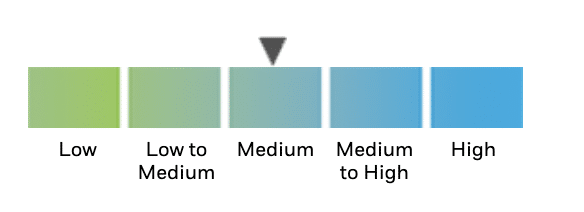
As an all-equity ETF, BlackRock iShares XIC ETF is a medium-risk investment. It effectively tries to follow the performance of the entire Canadian stock market.
Launched in 2001, the BlackRock iShares XIC ETF is one of the oldest ETFs with an extensive performance history.
XIC.TO is currently trading at close to $56.09.
XIC Key Facts
As of October 5, 2023:
-
Ticker Symbol: XIC.TO
-
Exchange: Toronto Stock Exchange
-
Assets Under Management: $8.4 Billion
-
MER: 0.06%
-
12-Month Trailing Yield: 3.37%
-
Currency Traded: CAD
-
Registered Accounts Availability: Yes
iShares XIC ETF MER and Fees
iShares XIC has a very low Management Expense Ratio (MER) at 0.06%.
It is less pricey compared to many other ETFs with similar exposure to the financial sector.
It also costs a lot less than some of the closest comparable ETFs in terms of investment objectives and asset allocation.
Its MER is also significantly lower than any mutual fund product that provides investors with similar features and benefits. With the average mutual fund fees being 2% or higher, ETFs offering lower MERs—like iShares XIC—is a crucial reason why many Canadians prefer ETFs over mutual funds in recent years.
iShares XIC ETF Dividend Yield
iShares XIC's dividend yield as of October 5, 2023:
-
12-month trailing yield: 3.37%
-
Distribution yield: 3.58%
-
Dividend schedule: Quarterly
iShares XIC ETF Performance and Returns
Here's the hypothetical growth of XIC if you had invested $10,000 since inception:

As of September 30, 2023:
Go to the Blackrock website for real-time performance numbers of XIC.
What Does BlackRock iShares XIC ETF Invest In?
iShares XIC is one of the oldest ETFs in existence, and it set the pace for other ETFs to follow. The all-equity ETF diversifies its asset allocation across several sectors of the Canadian economy.
iShares XIC ETF Asset Allocation
As of October 05, 2023, iShares XIC ETF has allocated most of its funds to Canadian equity securities.
iShares XIC ETF Top Holdings
As of October 06, 2023, Royal Bank of Canada is its most significant holding at 6.33%. It is followed closely by The Toronto-Dominion Bank, at 5.33% and Enbridge Inc at 4.09%.
iShares XIC ETF Sector Weighting
XIC is heavily invested in the financial, energy, and industrials sectors:
As of October 5, 2023:
iShares XIC Risk Indicator
XIC is a medium risk ETF:
iShares XIC ETF vs. Other ETFs
iShares XIC ETF vs. iShares XIU ETF
iShares XIU is another ETF that you can consider investing in if you want to track the Canadian stock market's performance.
However, iShares XIU ETF has a significant difference with iShares XIC ETF: iShares XIU ETF holds only the top 60 companies trading on the TSX in its portfolio based on market capitalization.
Compare that to 219 companies for iShares XIC ETF, and you can see that iShares XIU ETF offers you a more focused exposure to the top Canadian companies.
Moreover, the top 10 holdings account for around a third of iShares XIC ETF’s total portfolio, while the top 10 holdings in iShares XIU ETF make up around half of its complete portfolio.
iShares XIU ETF can be a viable alternative to iShares XIC ETF if you want exposure to a more growth-focused basket of Canadian stocks.
However, you also run the risk of individual asset performances impacting the entire ETF’s performance and returns more significantly.
iShares XIC ETF vs. Horizons HXCN
Horizons HXCN is another ETF to consider investing in if you want to track the Canadian stock market’s performance.
As an ETF product offered by Horizons, it seeks to replicate the same underlying index as iShares XIC ETF. Hence, the ETF's entire holdings and top ten holdings are similar to iShares XIC ETF.
However, a notable difference between the two ETFs is that Horizons HXCN has a slightly lower MER of 0.05%. Another difference worth noting is Horizons HXCN’s inception in 2020. Because it is newer than iShares XIC ETF, it does not boast the kind of past performance that iShares XIC ETF has.
All in all, Horizons HXCN could be a viable alternative to iShares XIC ETF because of its slightly lower MER.
How to Buy BlackRock iShares XIC S&P/TSX Capped Composite Index ETF in Canada
Is IShares XIC ETF A Good Investment For You?
If you're looking to invest in the Canadian markets, XIC has one of the largest AUMs in the country for this index.
It's a solid choice for a Canadian equity ETF, and one I would recommend adding to your watchlist.
Not sure about what ETF to choose? Check out these other iShares ETFs that might work for you.
Best next step
Keep exploring this topic
If you want to go deeper, these are the most useful follow-up pages and tools for this topic.
ETF hub
Browse ETF categories by goal
Jump into core, dividend, fixed-income, and sector ETF clusters from one place.
ETF tool
Use the Canadian ETF screener
Filter ETFs by yield, AUM, and performance when you are narrowing a shortlist.
Popular guide
Start with our top ETF roundup
Start with a broad ETF guide if you want a quick shortlist across the main fund categories.
Advertisement
7 stocks to buy and hold forever
Proven winners for income investors — blue-chip dividend stocks to hold for decades.
Get the FREE Report
Christopher Liew, CFA, CFP®
Christopher is the founder of Blueprint Financial and a CTV News personal finance columnist. As a dual-designated CFA charterholder and Certified Financial Planner (CFP®), he helps Canadians reduce financial stress through clear, customized financial plans.
View Full Profile →✅ Reviewed by Certified Financial Professionals
This content has been reviewed by CFA® charterholders and Certified Financial Planners (CFP®) with over a decade of experience in Canadian financial markets. All information is fact-checked against official Canadian sources and regulations.
Why these credentials matter: CFA® charterholders complete 900+ hours of rigorous study in investment analysis and ethics. CFP® professionals are held to the highest standards of financial planning competency and fiduciary duty in Canada.
⚠️ Professional Disclaimer
This content is for educational purposes only and should not be considered personalized financial advice. While our team brings professional expertise, individual circumstances vary. For personalized guidance, consult with a qualified financial advisor, tax professional, or mortgage specialist.