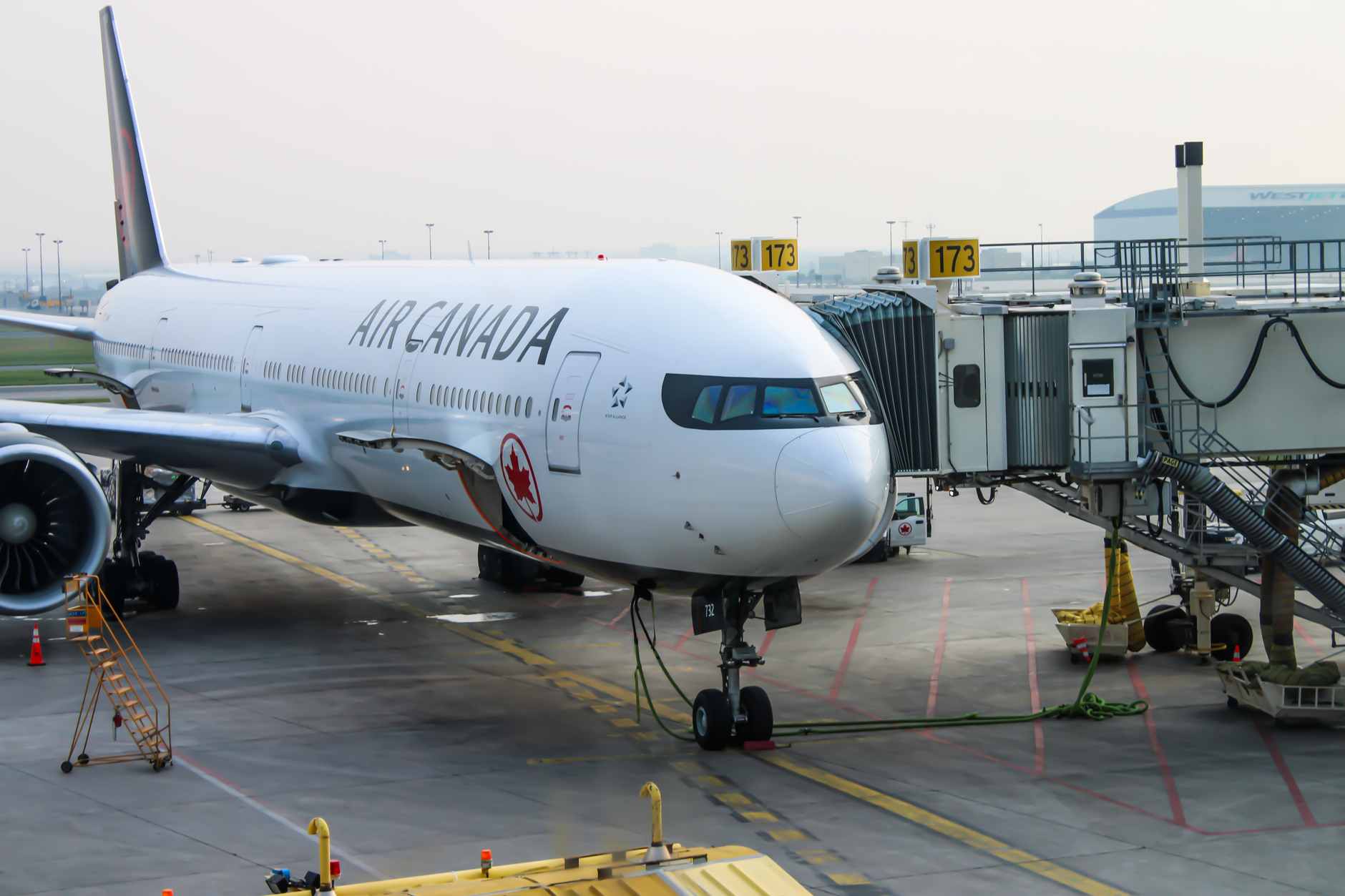
Air Canada shares soared by 3.33% today, buoyed by positive developments in labor relations and fleet modernization.
Air Canada (AC.TO) experienced a notable uptick in its stock price, closing at CA$22.94 after a 3.33% increase in the last trading session. This rise is due to recent labor agreements and the airline's ongoing fleet modernization efforts, which are expected to improve operational efficiency and customer experience.
Investor takeaway: Investors should consider the implications of Air Canada's recent labor agreements and fleet upgrades as potential catalysts for future growth, while staying aware of the competitive landscape and operational challenges.
Advertisement

Get up to $2,000 cash back
Open and fund a new Qtrade account with promo code SPRING26. Offer ends July 31, 2026.
Air Canada
AC.TO
AC.TO
Air Canada
 WealthAwesome
Market cap
$7.02B
P/E
10.1x
52W high
$25.50
52W low
$16.45
1W change
-9.85%
Beta
1.65
Analyst Price Targets
Based on analyst covering AC
Wall Street analysts forecast AC stock price to rise 9.4% over the next 12 months.
Consensus
Moderately BullishBased on avg. target vs last close (formal rating unavailable for Canadian listings)
Avg. Target
C$25.03
+9.4% Upside
Current Price
C$22.87
Last close
Analyst ratings and price targets are updated periodically. Not financial advice.
Wealth Awesome Price Forecast
WA ModelStatistical 90-day price range based on AC's historical volatility
30-Day Vol
31.5%
Annualized
90-Day Vol
34.6%
Annualized
Trend (90d)
+50.0%
Annualized drift
90d Mean
C$27.34
Expected price
| Horizon | Expected | 68% Range (1σ) |
|---|---|---|
| 30 trading days | C$24.27 | C$21.77 – C$27.06 |
| 60 trading days | C$25.76 | C$22.09 – C$30.04 |
| 90 trading days | C$27.34 | C$22.65 – C$33.00 |
Methodology: Range is calculated using 30-day realized volatility via geometric Brownian motion (log-normal model). 68% band = ±1σ, 95% band = ±2σ. This is a statistical model, not a prediction. Past volatility does not guarantee future results. Not financial advice.
Air Canada stock up 3.33%
The stock's increase reflects growing investor confidence following recent labor agreements and fleet enhancements, amidst a backdrop of recovering air travel demand.
Bull case
The recent tentative agreement with IAMAW, which covers over 11,000 employees, signals stability and a commitment to labor relations, helping improve operational efficiency. Additionally, the introduction of next-gen aircraft like the A321XLR is expected to lower costs and boost margins, positioning Air Canada favorably in a recovering travel market.
Bear case
Despite these positive developments, investors should be cautious of rising fuel costs and intense competition in the airline industry, which could squeeze profit margins and earnings in the near term. How the market reacts to these factors will be crucial in determining the stock's future performance.
Labor Agreements Signal Stability
Air Canada's recent tentative agreement with IAMAW, covering over 11,000 employees, is a significant step toward ensuring operational stability. This agreement not only acknowledges the contributions of the airline's workforce but also paves the way for smoother operations as the airline continues to recover from the pandemic's impact.
Fleet Modernization Enhancements
The introduction of next-gen aircraft, including the A321XLR, is expected to cut operational costs and enhance the customer experience. These aircraft are designed for fuel efficiency and improved service, which could strengthen Air Canada's competitive position in the market.
Market Reaction and Future Outlook
The positive market reaction to Air Canada's stock reflects investor optimism about the airline's strategic initiatives. However, it’s important for investors to remain vigilant about external factors such as fuel prices and competition that could affect future performance.
Advertisement