Looking to invest in Canadian energy?
One of the easiest ways to do so without picking your own stocks is using by using an ETF.
This iShares XEG ETF review will show you if this energy investment will be the right fit.
Advertisement
[affiliatable id='27068']
Pros
-
Targeted exposure to companies in Canada’s energy sector
-
Well diversified
Cons
- Can find other energy ETFs with lower MERs
What Is iShares XEG ETF?
BlackRock iShares XEG ETF tracks the S&P/TSX Capped Energy Index.
Launched on March 19, 2001, the index follows the publicly-traded Canadian companies' performance in the Toronto Stock Exchange’s (TSX) massive oil and gas industry.
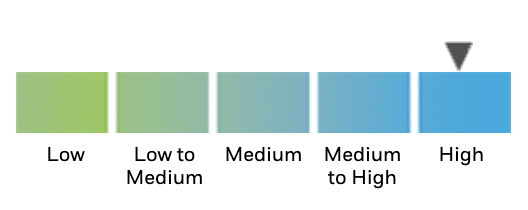
iShares XEG ETF is classified as a high-risk investment.
XEG.TO is currently trading at close to $30.78.
XEG Key Facts
As of June 30, 2022:
-
Ticker Symbol: XEG.TO
-
Exchange: Toronto Stock Exchange
-
Assets Under Management: $2.15 Billion
-
MER: 0.61%
-
12-Month Trailing Yield: 1.91%
-
Currency Traded: CAD
-
Registered Accounts Availability: Yes
iShares XEG ETF MER and Fees
iShares XEG has a Management Expense Ratio (MER) of 0.61%, which is considerably higher than several other ETFs.
However, its MER is significantly lower than mutual fund products that provide investors with similar features and benefits.
iShares XEG ETF Dividend Yield
iShares XIU's dividend yield as of July 14, 2022:
-
12-month trailing yield: 2.15%
-
Distribution yield: 3.26%
-
Dividend schedule: Quarterly
iShares XEG ETF Performance and Returns
Here is the growth of a hypothetical $10,000 since the inception of iShares XEG:
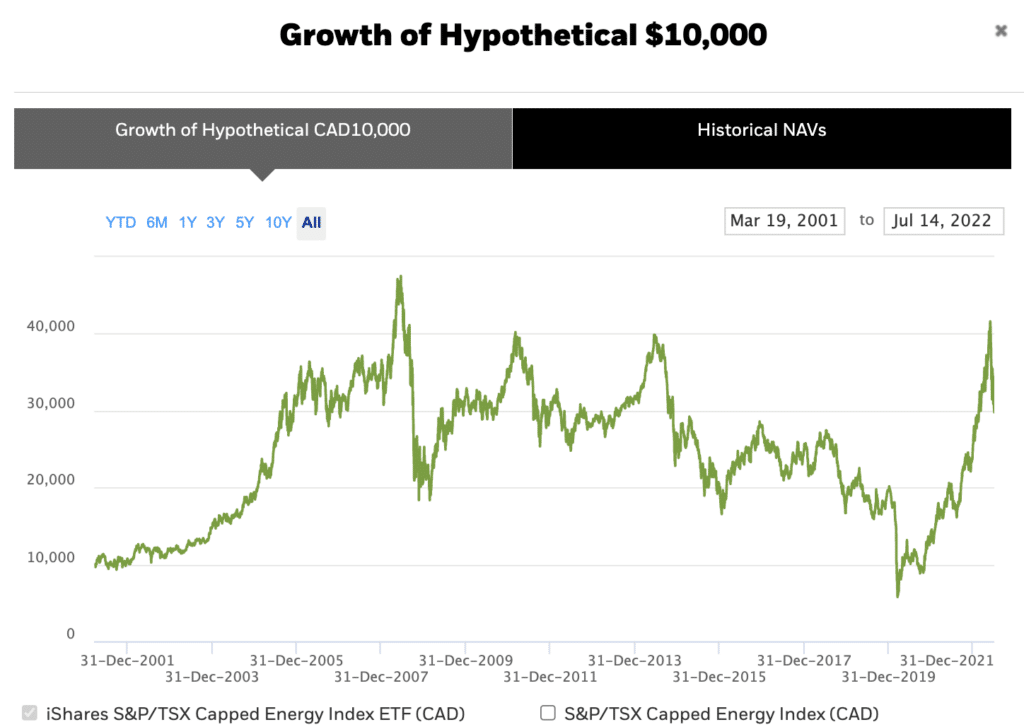
As of June 30, 2022:
What Does BlackRock iShares XEG ETF Invest In?
iShares XEG ETF invests in 14 publicly-traded energy companies, which aims to reflect the Canadian energy industry's performance overall.
iShares XEG ETF Asset Allocation
As of July 14, 2022, iShares XEG ETF has allocated 99.92% of its funds to equity securities. It holds the remaining 0.08% of its assets in cash and derivatives, making it an all-equity ETF.
| Asset Class | Investment |
|---|---|
| Canadian Equity | 99.92 |
| U.S. Equity | 0.00 |
| International Equity | 0.00 |
| Fixed Income | 0.00 |
| Other | 0.00 |
| Cash | 0.08 |
Source: Morningstar.com
iShares XEG ETF Top Holdings
Canadian Natural Resources Ltd. is its most significant holding, accounting for a quarter of its total assets.
At 25.04% asset allocation as of July 15, 2022, Canadian Natural Resources is its largest holding.
Suncor Energy Inc. closely follows it at a 23.83% weighting. Cenovus Energy is its third most significant holding at an 11.31% weighting.
iShares XEG ETF Sector Weighting
As of July 14, 2022, here is the sector weighting for XEG:
iShares XEG Risk Indicator
XEG is a high risk ETF:
Source: Blackrock.com
iShares XEG vs. Other ETFs
iShares XEG ETF vs. iShares XIC ETF
iShares XIC is an ETF that you can consider investing in if you want to track the overall Canadian stock market's performance. iShares XIC allocates its funds to the top Canadian companies based on their market capitalization.
Unlike iShares XEG, iShares XIC diversifies across all Canadian economic sectors. To be specific, iShares XEG ETF holds 14 stocks, while iShares XIC ETF invests in a basket of over 200 companies. Clearly, you can count on a lot more diversity from iShares XIC.
iShares XIC ETF can be a viable alternative to iShares XEG ETF if you want broad exposure to the Canadian equity security market with lower risk tolerance.
You can find out more about iShares XIC in my full iShares XIC ETF review here.
iShares XEG ETF vs. Horizons HXE ETF
Horizons HXE is another ETF to consider investing in if you want to track the Canadian energy sector's performance.
It is an ETF product offered by Horizons and seeks to replicate the same index’s performance as iShares XEG. Hence, both the ETFs’ holdings are similar.
Take note, however, that while Horizons HXE has the same top ten holdings, its allocation towards individual assets may differ from iShares XEG's in terms of weighting.
Another notable difference is that Horizons HXE has a substantially lower MER of 0.27% than iShares XEG ETF's 0.61%. Lastly, Horizons HXE ETF was launched in 2013, making it significantly newer than iShares XEG.
Horizons HXE can be a viable alternative to iShares XEG because of its significantly lower MER.
How to Buy iShares XEG ETF in Canada
Is iShares XEG ETF a Good Investment for You?
If you want to invest in the energy market in Canada, then XEG might be a good ETF for you. However, it's hard for me to recommend this due to its high MER.
You can check out some other energy ETFs here with lower MERs.
Best next step
Keep exploring this topic
If you want to go deeper, these are the most useful follow-up pages and tools for this topic.
Gold ETFs
Best gold ETFs in Canada
Compare physically backed and miner gold ETFs, including CGL, VALT, KILO, and XGD.
ETF hub
Browse ETF categories by goal
Jump into core, dividend, fixed-income, and sector ETF clusters from one place.
ETF tool
Use the Canadian ETF screener
Filter ETFs by yield, AUM, and performance when you are narrowing a shortlist.
Popular guide
Start with our top ETF roundup
Start with a broad ETF guide if you want a quick shortlist across the main fund categories.
Advertisement
7 stocks to buy and hold forever
Proven winners for income investors — blue-chip dividend stocks to hold for decades.
Get the FREE Report
Christopher Liew, CFA, CFP®
Christopher is the founder of Blueprint Financial and a CTV News personal finance columnist. As a dual-designated CFA charterholder and Certified Financial Planner (CFP®), he helps Canadians reduce financial stress through clear, customized financial plans.
View Full Profile →✅ Reviewed by Certified Financial Professionals
This content has been reviewed by CFA® charterholders and Certified Financial Planners (CFP®) with over a decade of experience in Canadian financial markets. All information is fact-checked against official Canadian sources and regulations.
Why these credentials matter: CFA® charterholders complete 900+ hours of rigorous study in investment analysis and ethics. CFP® professionals are held to the highest standards of financial planning competency and fiduciary duty in Canada.
⚠️ Professional Disclaimer
This content is for educational purposes only and should not be considered personalized financial advice. While our team brings professional expertise, individual circumstances vary. For personalized guidance, consult with a qualified financial advisor, tax professional, or mortgage specialist.